
1. How the Framework Fits Together
Read the framework from the broadest company layer down to the individual seat: Organisation → Department → Team → Sub-team → Position → Employee / Incumbent Level / Grade is not a separate branch in this chain. It is attached to each Position and provides a common company-wide measure of seniority and capability. Reports To then connects one Position to another to form the reporting hierarchy.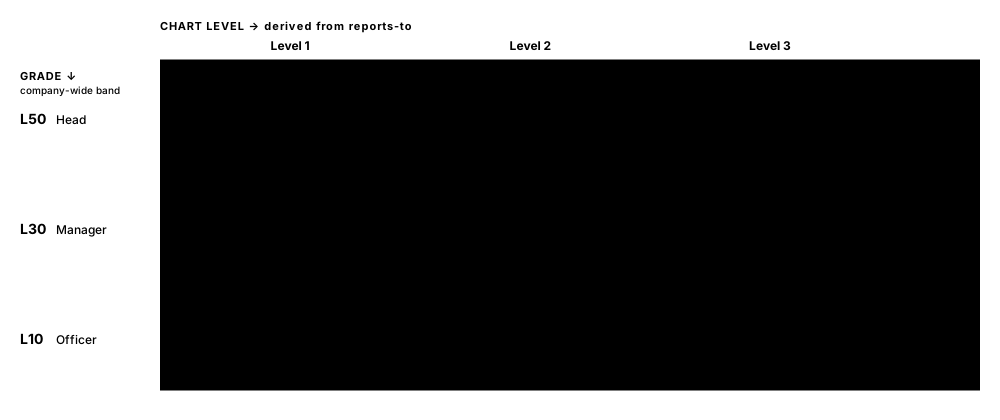 How Organisation, Department, Team, Position, and Employee fit together — and where Grade and Level sit in that chain.
2. Levels: Understanding Why Level and Position Title Are Different
Levels create a common company-wide language for seniority and capability. They should be defined consistently across the organisation, while departments remain free to use the position titles that make sense for their work. A department only needs the levels required by its target structure; it is not necessary to create a position at every level.Core rule
Title tells you what the person is called or what role they perform. Level tells you where the Position stands within the organisation.
Both positions can legitimately use the title Manager. However, the
L50 Procurement Manager represents a more senior organisational level
than the L30 Marketing Manager. When people from different
departments interact, the level gives them a common reference for the
experience, scope and authority expected from the position.
Experience ranges are useful indicators, but years of experience
should not be the only factor. Level design should also consider the
complexity of work, decision-making authority, accountability,
leadership scope, independence and organisational impact.
3. Grade Master Reference
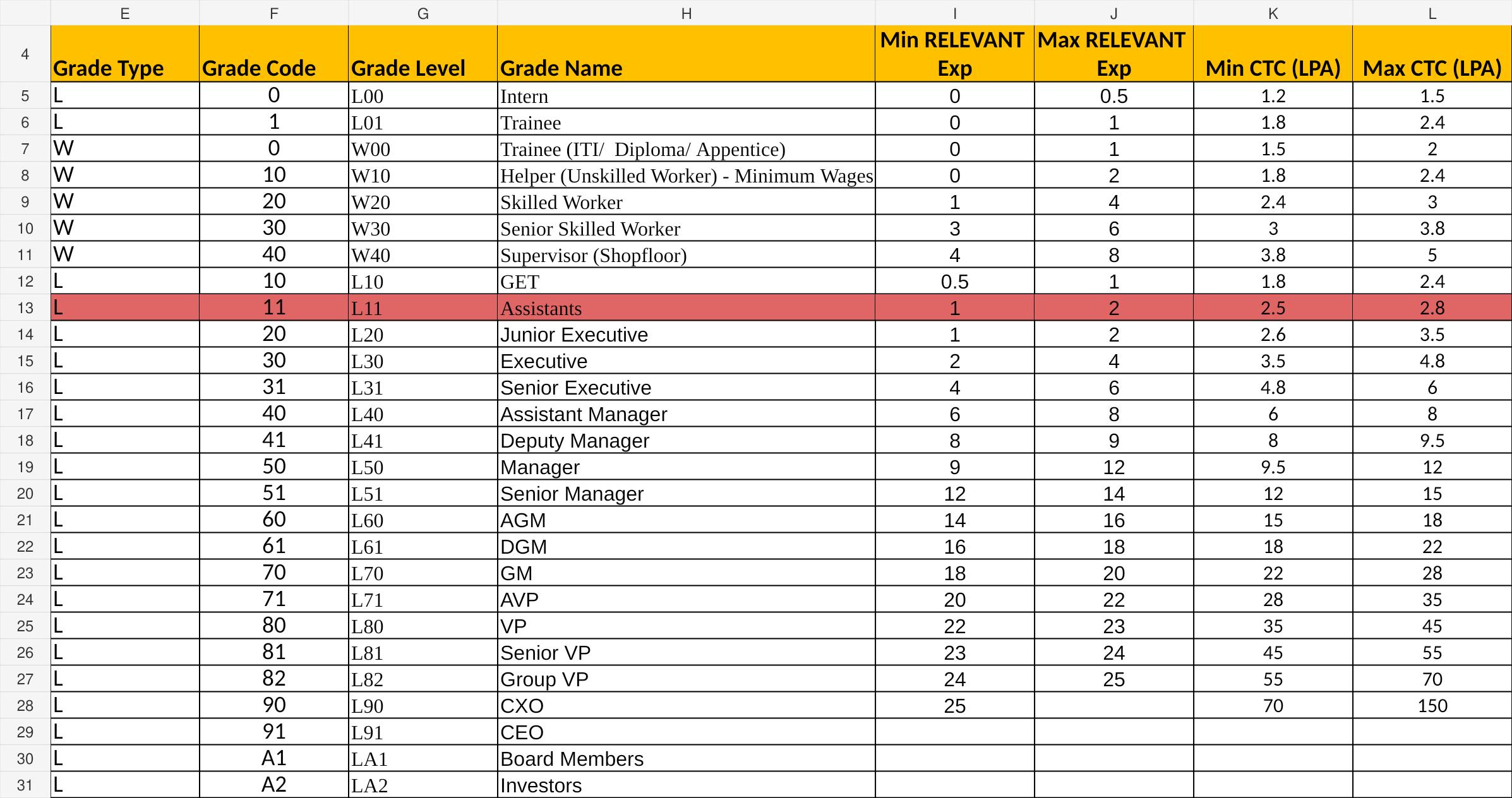 The common grade master runs from L00 (Intern) through L91 (CEO), with
separate governance categories such as Board Members and Investors.