
1. Departments, Teams and Sub-teams
Codes should be stable, short and unique within the agreed scope. Names can be refined later, but codes should not be casually reused because they form part of Position IDs and may be referenced in historical records.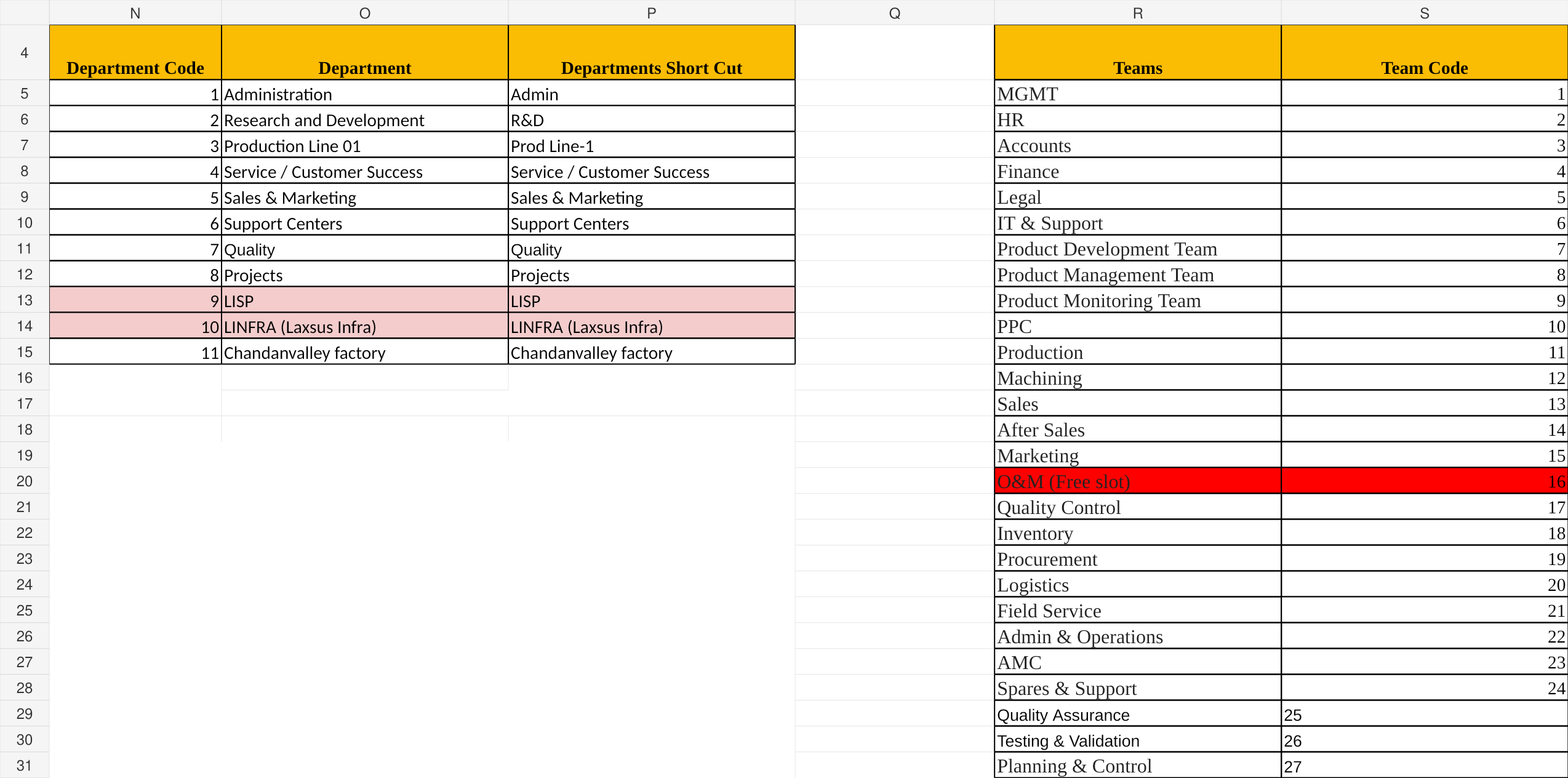 Example: department and team masters with independent codes.
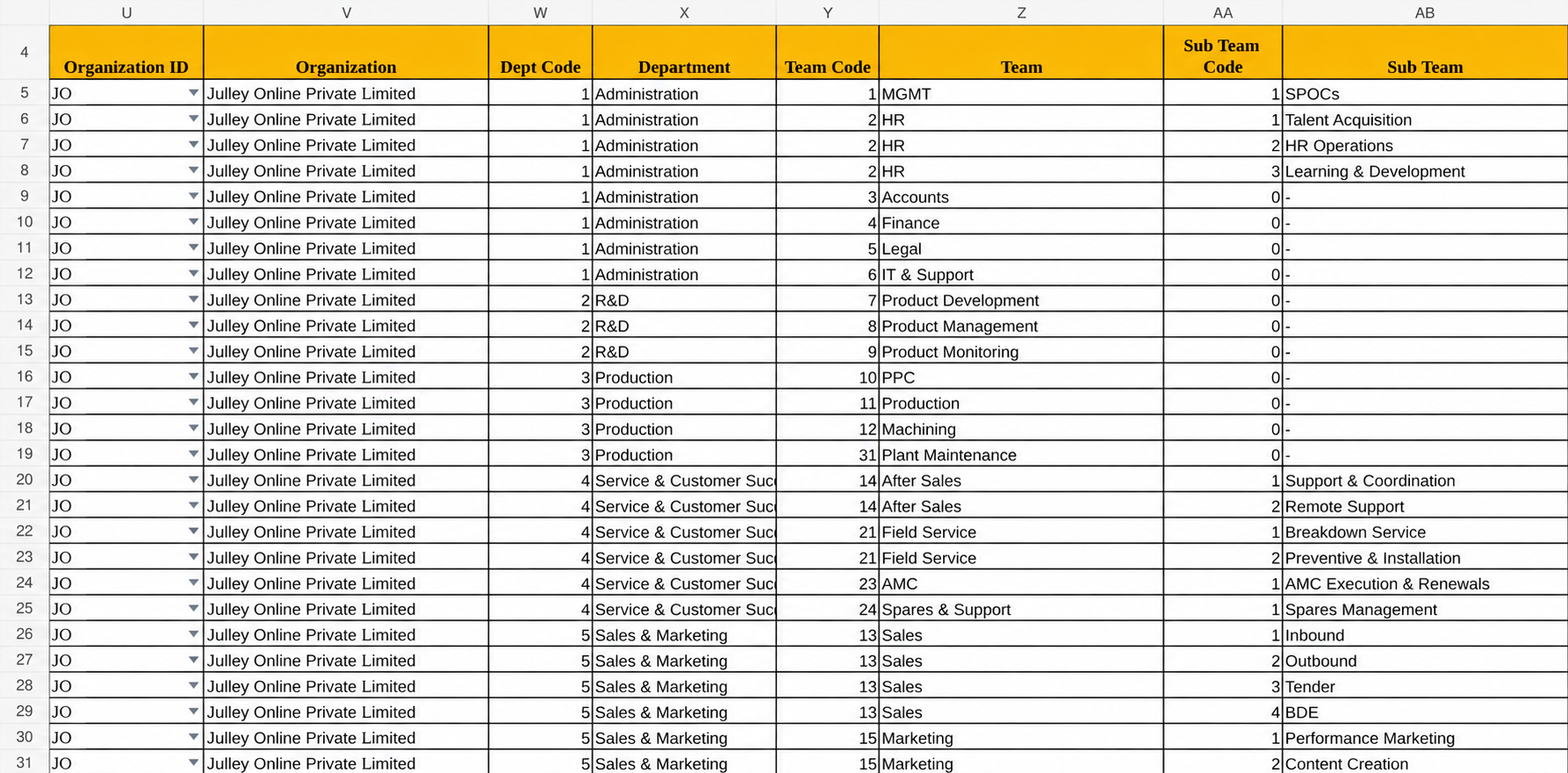 Example: organisation → department → team → sub-team mapping. “00 /
-” is used where no sub-team is required.
2. Positions: Defining Position Name, Position Title and Level
Naming rule
Position Titles may be function-specific and the same title may appear at different levels. Use the Level / Grade - not the title - as the company-wide indicator of seniority.
3. Forming Position ID
A Position ID should identify the seat, not the employee. A recommended fixed-format structure based on the uploaded workbook is:- Use fixed-width codes so that leading zeros remain meaningful and IDs are easy to scan.
- The serial number identifies the individual seat when more than one position exists with the same organisation, department, team, sub-team and grade combination.
- Never place employee name, employee ID, joining year or current manager name inside the Position ID.
- Once a Position ID has historical usage, prefer end-dating/deactivating it rather than recycling it for a different structural seat.
4. Handling Multiple Positions at the Same Level
Multiple positions at the same level are allowed and are often necessary. The level indicates comparable organisational seniority; the position name, title, function and serial number distinguish the seats. Likewise, the same Position Title may also appear at different levels when the roles differ in experience, scope or accountability. Example: one CEO at L91 and multiple CXO positions at L90. Each CXO
seat has a different Position ID.
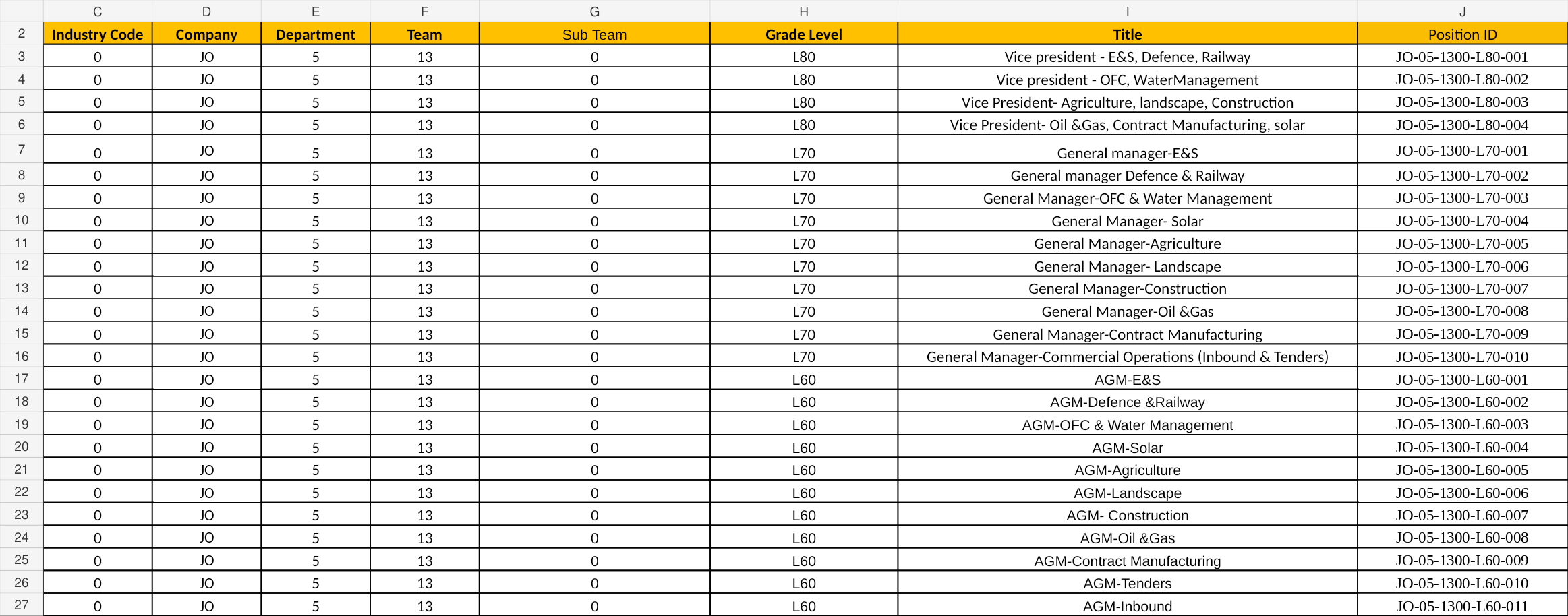 Example: multiple L80 VP positions and multiple L70/L60 positions
inside the same Sales team. Each seat is independently identified by
its serial number.