
The Leaderboard gives a comparative view of adoption across the organisation — your current rank and points, organisation averages, active members, team rankings, level distribution, and individual rankings.
1. Your Scorecard
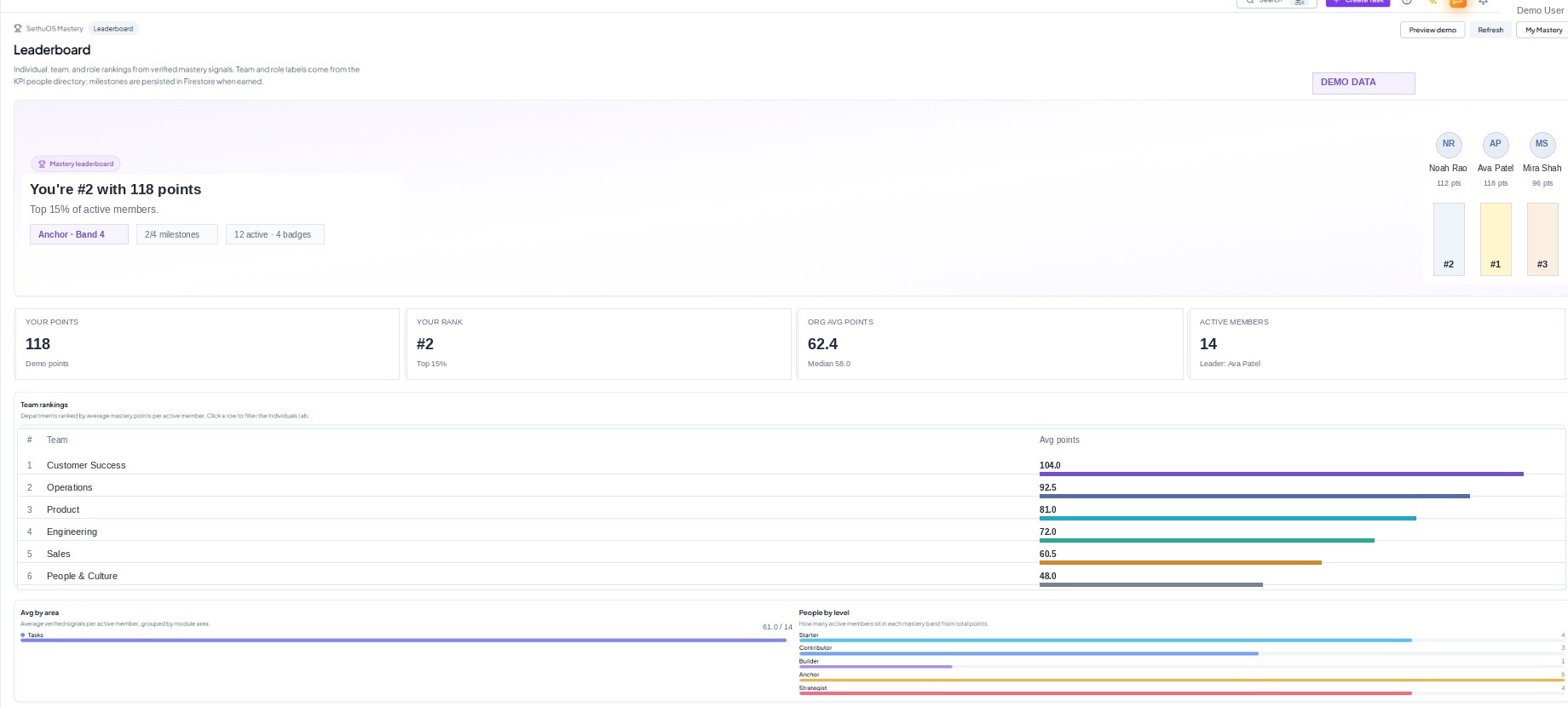 Leaderboard overview with rank, points, team rankings, and level
distribution.
2. Individuals Tab
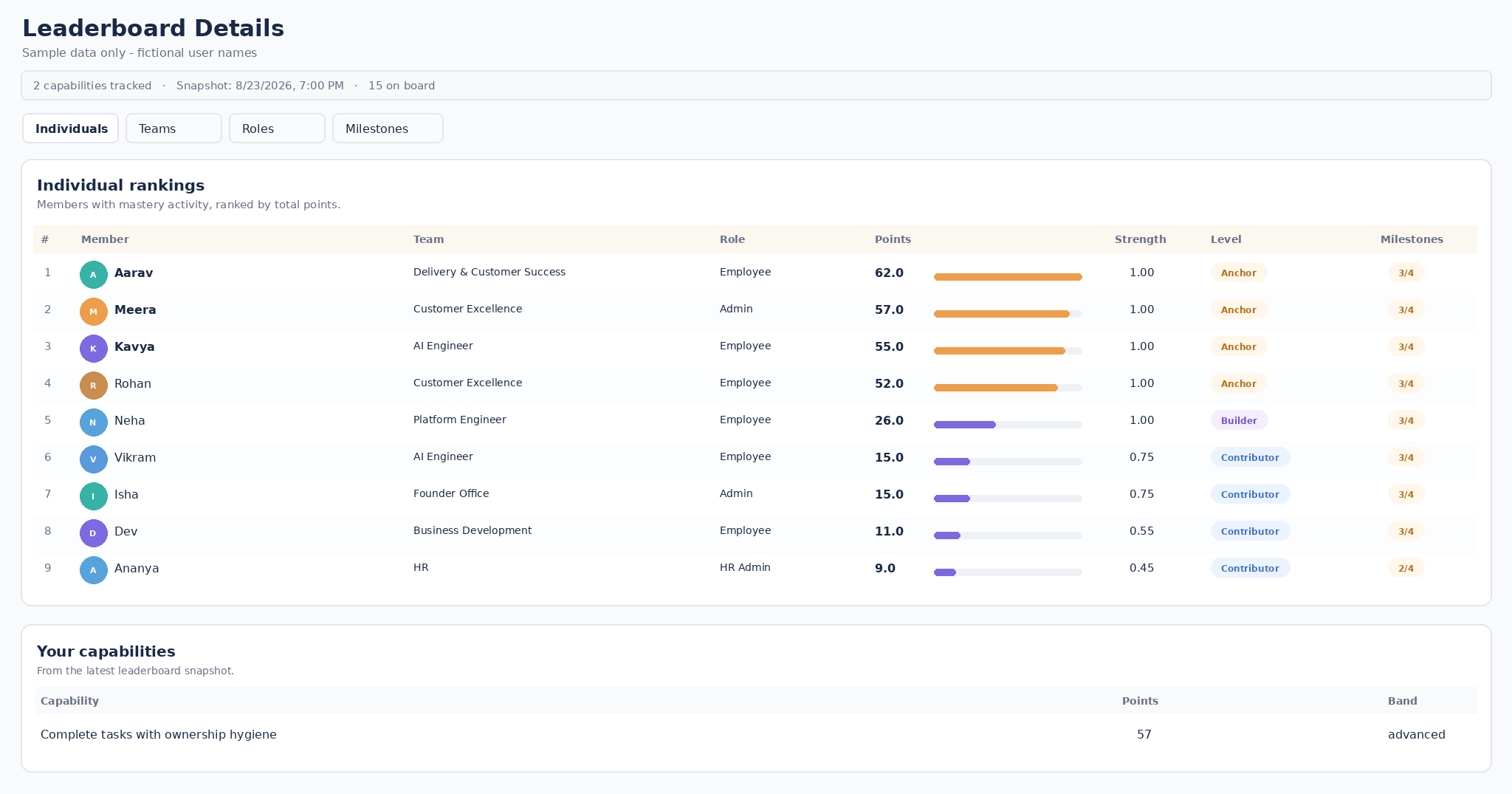
Individuals are ranked by Total Mastery Points, highest first, with each individual’s tier shown next to their points. Rank reflects mastery points, not login count or number of comments — for example, 62 points ranks above 57, 55 and 52.3. Teams Tab
 Team Rankings — teams are compared using average mastery points per
participant.
Teams are ranked primarily by average mastery points per
participating member, which prevents larger teams from automatically
winning simply because they have more people.
4. Roles Tab
The Roles tab follows the same principle as Teams, but groups participants by role instead of team. Role average = total mastery points for that role divided by participating users in that role.5. Milestones Tab
The Milestones tab shows which achievement conditions users have unlocked. It helps distinguish different mastery patterns such as first use, repeated task execution, breadth across capabilities, and depth in one capability. See Adoption & Mastery Concepts for what each milestone condition means.6. How to Infer
- Use rank and points to see relative adoption, but check delivery health before drawing conclusions.
- If a team has strong average points but high overdue work, adoption is active but execution hygiene still needs attention.
- If many users remain at Starter or Contributor, focus on simple daily habits before pushing advanced usage.
- Look for steady movement in levels over time rather than one-time spikes.